Labels

Showing posts with label Research Stage. Show all posts

Tuesday, 28 June 2016

Contextual Essay

I have chosen to write about Fluxus because it is an interesting movement and it links in with my current work.  I am also developing some pieces of performance art which I will be performing.  I hope that during my research I will gain a different insight into what performance is and how it has developed . As I read about Fluxus I can apply their methods and beliefs to influence my work. 

----------------------------------------------------------------------------------------------- 
Fluxus is an Anti-Art movement foundered and organised by George Maciunas in the 1960’s. It is a movement that combines music, art and poetry and was an intermedia phenomenon. Fluxus wasn’t just an Anti Art movement it was also Anti Music and Anti Poetry. The word fluxus has the meaning ‘to flow’.

Worldwide there were more than 50 artists associated with Fluxus.  These include American artists Dick Higgins and Alison Knowls, a Japanese artist, Yoko Ono, Frenchman Ben Vautrier, Korean artists Nam June Paik and from Germany, Joseph Beuys. 

The artists involved with the movement were inspired by Dadaism and the Futurist Movements and they focused on performance often using humour in their work like DaDa. John Cage, an artist who also influenced artists, believed that the final, finished piece of work shouldn’t be drawn out at the beginning because it is the process of getting to that final piece that is important.

Everyone involved in the movement didn’t agree with how the museums used their authority to decide what was art and what the value of art was. They also disagreed with how people should be educated to understand and view art. This then lead these artists to dismiss and mock the ‘high art’. Their goal was to destroy any boundary between life and art and also try and change the balance of power in the art world.

The first Fluxus event was in 1961 and was held at the AG Gallery in New York. Members of Fluxus also staged many festivals which were held in Paris, Amsterdam, London, Copenhagen and New York. Some of these festivals ended up spilling out onto the streets and this played a big role in opening up what art could be.

Fluxus artists didn’t just perform, they also made objects, these were made from cheap materials and involved volunteers to create them. 

-----------------------------------------------------------------------------------------------
George Maciunas was born in 1931 and was a Lithuanian-American designer and a cultural entrepreneur. Maciunas used the word fluxus to give a name to the wide range of activities he did which were simplistic and fun.

George and his family managed to escape the Soviet occupation to avoid being arrested by the Russians in Lithuania; they did so by moving to Germany in 1944 and stayed for a short period of time before moving to New York, America in 1948. From 1949, George studied Architecture, Art History, Graphic Design and Musicology throughout his academic years, ending up at the Institute of Fine Arts at New York University.  
During 1962-63 Maciunas created a festival which he called his ‘Festum Fluxorum’ and toured Europe. 

Maciunas created a performance called ‘The Fluxwedding’ where he and Billie Hutching got married and the bride and groom exchanged clothing. This performance took place in New York, 537 Broadway. Shortly after this George died of pancreatic cancer at the age of 47 in 1978. Later that year, Nam June Paik and Joseph Beuys produced a performance that lasted 74 minutes called ‘In Memoriam George Maciunas’. 

-----------------------------------------------------------------------------------------------

The 60’s was a time where there were a lot of feelings of anger, conflict and hope.  It was also a time of change in music, beliefs and experimentation. America had a lot going off; there was the Cold War relating to the relationship between America and the Soviet Union after the Second World War. Neither side actually fought, but other countries fought for them.  Russia was fighting for communism and America was fighting against it. 

There was also the Civil Rights movement - the fight against racial discrimination - that had been in progress since the 1950’s. By 1964 this movement was granted and everyone had equal rights, this didn’t really solve all the racial problems however as many people were still living in poverty. This movement also gave equal rights to men and women but not many were receptive to this and needed reinforcing.  This led to the feminist movement in the 1960’s.  Just as the Civil Rights movement was showing success, the leader, Martin Luther King was killed.  

The 60’s saw the first Roman Catholic elected as President, President John F Kennedy. He was a symbol of hope to all the young people of America. However with all the protesting against unfair treatment of black people, equal rights for woman but mainly about an end to the Vietnam War, Kennedy decided he would not stand another quarter as President. 

The young people of America began to question their parents’ values and Christian beliefs that they were being brought up with and felt that these principles weren’t enough to help them deal with all the social and racial difficulties they faced. Many people turned to music and this was how and when Rock and Roll began. The music became popular with many people however, some didn’t agree with the lyrics as they thought it was too sexual and unpleasant.

----------------------------------------------------------------------------------------------- 
I am going to talk about 3 artists, Yoko Ono, Nam June Paik and Joseph Beuys. I have chosen these as Ono is still alive today and has influenced a lot of artists and Paik and Beuys because I have mentioned them when talking about George Maciunas.
-----------------------------------------------------------------------------------------------

Yoko Ono was born in Tokyo in Japan in 1933.  She moved to New York to begin pursuing her art. She is a multimedia artists and performer. One of Yoko Ono’s most famous performance pieces is the one called ‘Cut Piece’ which was staged in 1964. This was a piece which involved the interaction of the audience as they where invited to go up to her and cut off pieces of her clothing until they left her complete naked. This was known as an abstract commentary on discarding materialism.

Ono was married to Anthony Cox, an American jazz musician and film producer. He helped Ono with and financed her work which enabled them to coordinate ‘interactive conceptual events’.  They separated in 1964.  Ono met and later married John Lennon, her third husband, in 1969. Together they collaborated on various art, film and musical projects until Lennon was shot and died in 1980. Yoko Ono still creates artwork to this day and tries to honor Lennon’s memory in her work. This lead to the start of the LennonOno Grant Peace Award in 2002, which would have been his 62nd birthday. 

Ono made work that continued with the beliefs of Fluxus as she was breaking away from all the labeling and what she thought was controlling in the art world. She wanted to be more unique and not conform to all the labels.

After reading about Ono’s ‘Cut Piece’ performance, I have to say she is an artist to admire. She gave herself to the audience and put a lot of trust in them. This is something I am starting to come to terms with but will take time and more understanding. I like how the performance had only herself, a pair of scissors and the people of the audience to interact with her. It must have been an intense performance even though the female body has been throughout art in the years, to actually almost unravel it gives it a different view. 

-----------------------------------------------------------------------------------------------

A friend of Yoko Ono from 1963, Nam June Paik who was born in Korea in 1932 and later died at the age of 74 in 2006. 

Paik is considered the founder of video art and is internationally known as the ‘Father of Video Art’, as he was the first to use televisions as a medium in art. He wasn’t only a video artist he was a performance artist, composer and visionary. Paik has a global presence and influence. He was active in New York and over the years created a large body of work, this included video sculptures, installations, performances, video tapes and television productions. 

Some of Paik’s influences were John Cage and Karlheinz Stockhausen who both collaborated with him and inspired his transition into electronic art.

Between 1958 and 1963 Paik was in Cologne and there he was pursuing his interest in experimental composition and performance. Paik was seeing what he could do with the boundary between the performer and the audience. In the middle of one performance, Paik actually went into the audience to John Cage with a pair of scissors and cut off his tie.  In 1963, Paik held a one artist exhibition which was shown in Germany at the Galerie Parnass. This exhibition showed his television sets. In 1964 he moved from Germany to New York.

What I like about Paik, is that he was the first to use the new technology at the time in art and managed to do so much with it. He was even able to make a bra or rather use 2 small screens to act like a bra for another artist that he collaborated with, Charlotte Moorman, who used it in one of her performances called TV Bra for Living Sculpture, in 1969. Paik has also created sculptures involving his video art and vintage TV screens, for example he made something that looks like a robot.

-----------------------------------------------------------------------------------------------

Joseph Beuys was born in 1921 and died in the year of 1986 in Germany. He was active in Europe and the United States from the 1950s to the early 1980s. His work ranges from drawings, paintings and sculpture to performances and action art. Beuys moved from his home town in Kleve to Dusseldorf in 1961 and then became a Professor of Sculpture at Dusseldorf Academy. In 1962, Beuys took part in Fluxus and in 1963 he started to do his action art.

Beuys is best known for his fat and felt pieces of art work, he had his own personal reasons for using fat and felt. When Beuys was a dive-bomber pilot he was shot down over Crimea in a snow storm in 1943.  Some Tartars found him and looked after him as he was badly wounded. They wrapped him up in felt and fat which kept him warm.  When Beuys came round, he could smell the fat and felt and this, he says, brought out the artists within him. He now suggests that art could have healing effects on the audience or the artists or both. 

Many of Beuys’ performance were not planned out and could last anywhere between 45 minutes to 9 hours. 

One of the performances I like has to be the one called ‘I like America and America likes me’. This involved Beuys being in a cage with a wild coyote. Beuys was brought from his plane by ambulance to the museum, from the ambulance by stretcher in fat and felt into the cage and then left for about a week. The performance shows Beuys tame the wild animal and Beuys coming out of the fat and felt, and being one with the coyote. As the performance came to an end he went back into his fat and felt and was took out of the building the way he came in. There are some questions as to whether the coyote was wild or not but this just shows how much Beuys believed in the power of the fat and felt from his accident. 


In conclusion, after I have looked into Fluxes and the 3 artists I chose, I have decided that I will use this essay and research, along with more in-depth research into some artists as a starting point for my Final Major Project. I will look more at the performance artists such as Yoko Ono and Joseph Beuys as I have found their work to be rather interesting and Yoko Ono is still creating artwork now. I want to improve my knowledge about performance art and use what I gain with my own work.

Bibliography for Essay


http://www.tate.org.uk/learn/online-resources/glossary/f/fluxus
http://www.theartstory.org/movement-fluxus.htm
http://www.artmovements.co.uk/fluxus.htm
http://www.visual-arts-cork.com/history-of-art/fluxus.htm
http://www.fluxus.org
https://www.youtube.com/watch?v=cGZ9OS1Oj14
http://www.iniva.org/dare/themes/play/ono.html
http://www.theartstory.org/artist-beuys-joseph.htm
http://www.tate.org.uk/art/artists/joseph-beuys-747
https://www.theguardian.com/artanddesign/2009/mar/05/joseph-beuys-homogeneous-infiltration
http://georgemaciunas.com
http://georgemaciunas.com/about/
http://www.moma.org/interactives/exhibitions/2013/charting_fluxus/
http://www.paikstudios.com
http://www.tate.org.uk/whats-on/tate-liverpool/exhibition/nam-june-paik

http://www.tate.org.uk/visit/tate-modern/display/media-networks/nam-june-paik

Tuesday, 22 March 2016

research and ideas

Whilst watching this i have had the idea of wrapping myself up like in the photo with toilet roll videoing me unraveling to show how serious i could be then having say my face covered in some material like feathers then videoing myself taking them off to reveal me underneath. Speed it up so that its a bit of a jumpier video.

I could go into a nursery and go back to children and interact with them as they do.
Also use shaving foam and child safe products.

Tuesday, 15 March 2016

Abstract Expressionism

Abstract Expressionism

·      Abstract Expressionism is an American movement.
·      The meaning is ‘diverse styles and techniques, emphasizing an artists liberty to convey attributes and emotions through non-traditional and usually no presentational mean.’
·      The term was first used in Germany, it was given to Wassily Kandinsky in 1919 that is a Russian artists.
·      The movement put New York at the centre of the western art world.
·      Even though this name was given in the 1919’s this movement really made its make in the 1950’s.
·      Wassily Kandinsky moved from Germany at the time of the first world war to escape from Hitler and his decision to execute all artists he called degenerate. Kandinsky brought the name over to New York.

Abstract Expressionism is an American movement. This put New York at the centre of the western art world. Germany was the place where the term was first used, it was given to Wassily Kandinsky in 1919 that is a Russian artists. Even though this name was given in the 1919’s this movement really made its make in the 1950’s. Wassily Kandinsky moved from Germany at the time of the First World War to escape from Hitler and his decision to execute all artists he called degenerate. Kandinsky brought the name over to New York.


·      Artists mainly baised in New York
·      Inspired by surrealist ideas that art should come from the subconscious/unconscious mind and the automatism of artist joan miro
·      2 types of groups – those who use expressive strokes – those who fill it with abstract forms and colour.
·      Action painters Jackson Pollock and willem de kooning
·      2nd group mark Rothko and Barnett newman and clyfford still


Within Abstract Expressionism there are 2 groups, Action Painters who use expressive strokes and the second group who created compositions using large areas of colour.

Research/ Bibliography

Ive decided i want to do my essay on the abstract expressionism.  as a group we now have padlet which allows us all to contribute research onto one page and view it all.

http://padlet.com/nncartanddesign/fyhnpcg0z5yu

http://charcoalstereo.com/2015/01/07/abstract-expressionism/    <----- this page has a good over view of the movement.

http://www.tate.org.uk/learn/online-resources/glossary/a/abstract-expressionism

Tuesday, 3 November 2015

Art Nouveau and Art Deco

Pre Raphaelites


Arts and Crafts Movement 


Art Nouveau 
This was the movement before Art Deco
Everything flowed as people were looking at organic design and geometric forms.
Late 19th and early 20th centary until art deco took over in 1920s
Aimed at modernising the previous style 
Darwin and Froid 
The metro in parris 
A declaration for the new art in the new century 


Art Deco 1920s - 1940s
after the 1st world war, you had the freedom to have almost anything war was over you weren't rationed.
it combined the machine age with the crafts (more mechanical)
empire state is more art deco


The music in the 1920s was swing and jazz all happy music for all the people who survived the first world war.
Technology was advancing and everyone was excited and getting on board with it.
Charabanc was a type of open top bus which was the alternative to the horse and cart.
Fashion had changed from long curved dressed to loosely fitted clothing that showed no figure and the long hair was gone it was cut to a bob. This was influenced in one way by the discovery of tu tu carmon and how the Egyptians dressed.
On one of the videos i have watched there is a gentleman measuring how much leg and arm woman had out at the beach, it wasn't acceptable to have too much skin out.

At the end of the 20s there was the wall street crash. Art deco lived through the rise and decline of the wealthy life style.

In 1925 the french held an exhibition......


Wednesday, 7 October 2015

Harley Gallery

I have been and visited the Harley gallery today for the open practice day to walk round the studio spaces artists use and what they do and ask questions and get to know what they are doing. There was one out of all the people I went to see and speak to which I really liked. I have a video of one of her works that really amazed me and when she said I could touch it I was even more excited as you aren't allowed to touch art work.
I loved the way each individual one had a spring in it and wobbled yet had the strength to stay attached to the ball and the wood.
She had different ones round the room and to be honest I want one!
http://www.wallerhewett.co.uk/      Theres her link to her website.

Bradford media museum

I went to Bradford and went into the media museum and went to the game floor and when I had finished with the games I sat down and notices that there was a projection on the wall in which you could interact with. At first I recorded 2 other students then I wanted to have a go.
I really enjoyed interacting with the media and found out as you hear in one of my videos that there was a Kinect and a whole square that was being monitored so that it could get a 3D view of you and the projection would show it.

Bradford

Went and visited bradford uni and although it had no relevance to what it is i want to do i did find something of use. This sculpture made me think about the 3d work we are doing from the posters i had to create.


Videos on fine art

https://www.youtube.com/results?search_query=matthew+collings+this+is+modern+art

Start from episode 1 and go to 6

Tuesday, 6 October 2015

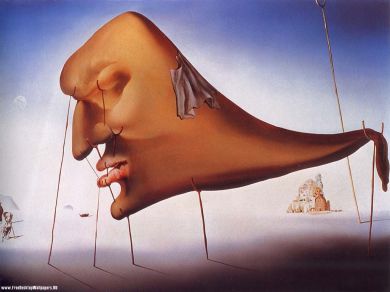
Dali and Dreamscapes

Dreamscapes are as the word suggests it is an image of someone's dream or their dream world, not all dreams make sense or are put together in the best way and dali is one who illustrates this very well.
This is a good example of dali's work as the main image is propped up.


Class Notes
- dali was a painter, film maker, sculpture


-Watching a matthew collins video...
only a publisty speaker how he was see by the proper artists of the time

2 films with luis Bunuel


http://ellenduffer.com/2013/02/21/representation-and-reality-in-salvador-dalis-dreamscapes/

how does this relate to me and my subject area??
http://www.wetcanvas.com/Articles2/118095/834/  <-- this might help

Its thinking out of the normal, being automatic, doing what come first into you're mind.


Buster keeton - watch his films, i live watching his films there funny, the films are easy to understand
he was accepted by the surrealists ....... because.........

Monday, 28 September 2015

Manifesto

What is a manifesto?
A manifesto is a statment which is published and made by a party/group of people of an individual stating their intention, motives or views.
It will accept either a previous published opinion or public consensus (which is a group desision making process) or it will promote a new idea and the changed which the party/group or individual believes should be made.

Surrealist manifesto
There were 2 surealist manifestos, the first was written by Breton and was then published in 1924. Editions du Sagittaire (a booklet).
"Psychic automatism in its pure state, by which one proposes to express — verbally, by means of the written word, or in any other manner — the actual functioning of thought. Dictated by the thought, in the absence of any control exercised by reason, exempt from any aesthetic or moral concern."
https://en.wikipedia.org/wiki/Surrealist_Manifesto
(1929) The second manifesto Breton asked surrealists to access their degree of moral competence. With this information he issued the second manifeste du surrealisme.
Surrealists who did not go by Baron, Densons, Boiffard, Michel Leiris, Raymond Queneau, Jacques Prevert and Andre Masson were no long apart of this. The surrealists who were loyal to Breton had signed their names on an insert of the manifestos release.

 Surrealism at the service of the revolution. This was after the second manifesto, by Andre Breton and his supporters. It was a more politically charged publication. The first one was published in 1930 and 5 more followed.
https://en.wikipedia.org/wiki/Le_Surrealisme_au_service_de_la_revolution

Heres a link to the first manifesto
http://www.tcf.ua.edu/Classes/Jbutler/T340/F98/SurrealistManifesto.htm

Heres the second manifesto
http://www.mattesonart.com/111111111111111111111111new-page.aspx

Tuesday, 15 September 2015

dada & duchamp

Ready mades

http://www.tate.org.uk/learn/online-resources/glossary/r/readymade

https://www.moma.org/learn/moma_learning/themes/dada/marcel-duchamp-and-the-readymade

mgith be some use??
http://www.dada-companion.com/duchamp/readymades.php

not what it looks like, so doesn't have to be pleasing to the eye
every day objects turning into something funny/different
its about the concept not the looks

Dada exquisite corps;
This is where artists would write a sentence or a line of words and fold the paper so that who ever next couldn't read it and would write their own sentence or few words. This would then create a body of txt which doesn't make sense, this was a parlour game just for fun. Later on artists would try to create poems. Then it got turned into a drawing using the same technique. 

Dada collage;


Duchamp has an alter ego Rrose selavy; 
The name Rrose is said like eros which is a greek god of sexual desire and attraction. So the name is a pun in its self.

The baroness - DaDa
Elsa von Freytag.
She was the face of DaDa.
She came up with the idea of the fountain by Duchamp.

 Duchamp's ready mades;

"Whether Mr Mutt with his own hands made the fountain or not has no importance. He CHOSE it. He took an ordinary article of life, and placed it so that its useful significance disappeared under the new title and point of view – created a new thought for that object."


Wednesday, 9 September 2015

Research

I could look into british artists who have created the extrodenary and memorable imagery from their time. For example the drooping clock by Salvador Dali but he is from spain. 
British surrealist artists are;
Paul Nash
Edward Wadsworth
Henry Moore;
Sculpture artist. I have come across this image of one of his works and i like the structure of this. How the multiple strings are in and out of the sculpture. I could incorporate this in my background.


Propaganda Poster

Research.
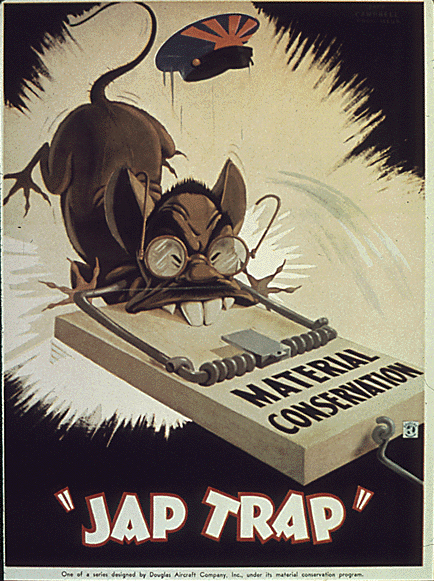
The USA created propaganda posters to recruit people for the war. Here are some as an example,
They have used the american flag to colour and represent the country. I could do the same with the british flag.

these are all really dull and don't interest the eye, I'm looking to do something thats bright and vibrant to catch every person who walks past the poster.